Como escolher um antiespumante de silicone para o controle de espuma industrial
A layer of foam disappears from the equalization tank after dosing. An hour later, a new load of wastewater comes in and the foam is back. For the operator, both observations matter. A silicone defoamer that clears existing foam quickly may behave differently once the incoming water, mixing conditions or temperature changes.
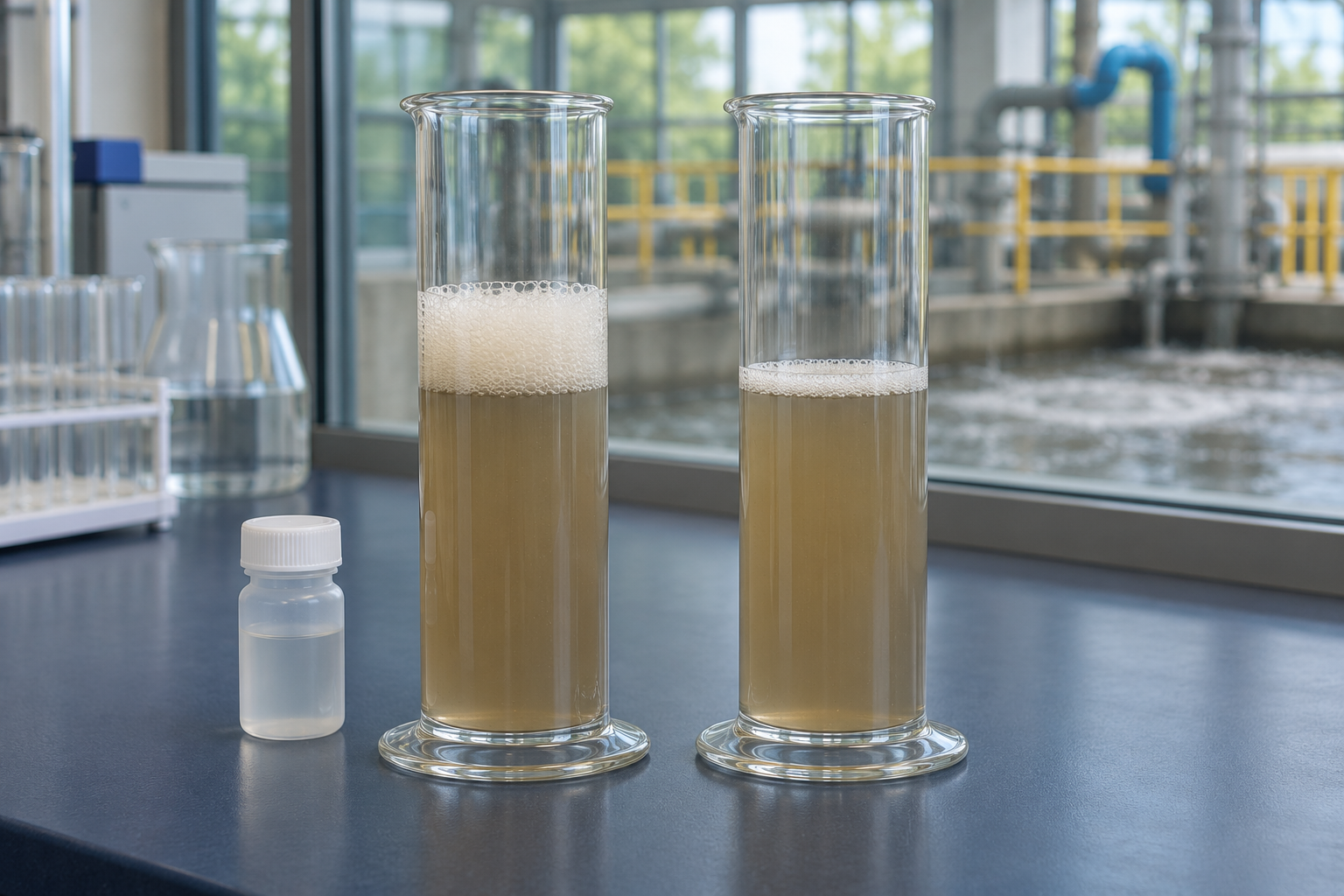
Start at the tank where foam returns
In industrial wastewater, surfactants carried in from cleaning operations can make foam more persistent. In an aeration basin, stable foam can also be linked to filamentous bacteria. Before adjusting the silicone defoamer feed, note where the foam first appears and whether it follows a particular discharge, a shift change or a change in aeration. If it persists on the biological stage, check the process conditions alongside the foam trial.
Compare dose on the same basis
Industrial antifoam guide lists 50 ppm and 100 ppm for two different silicone emulsions used in wastewater treatment. Those are examples for specific products. In a trial, record whether the silicone defoamer dose is reported as supplied or as active ingredient. For example, 50 ppm by mass of a 10% active emulsion delivers 5 ppm of active ingredient. Keeping that distinction in the log makes it easier to compare products and calculate consumption.
To screen a silicone defoamer, take a fresh sample from the problem point and keep an untreated control. Use the same sample volume, temperature and agitation for each test. Record how quickly the foam falls, then repeat the agitation and see how much comes back. During a plant trial, log the feed rate alongside wastewater flow. A fixed pump setting can deliver a different dose when the flow changes.
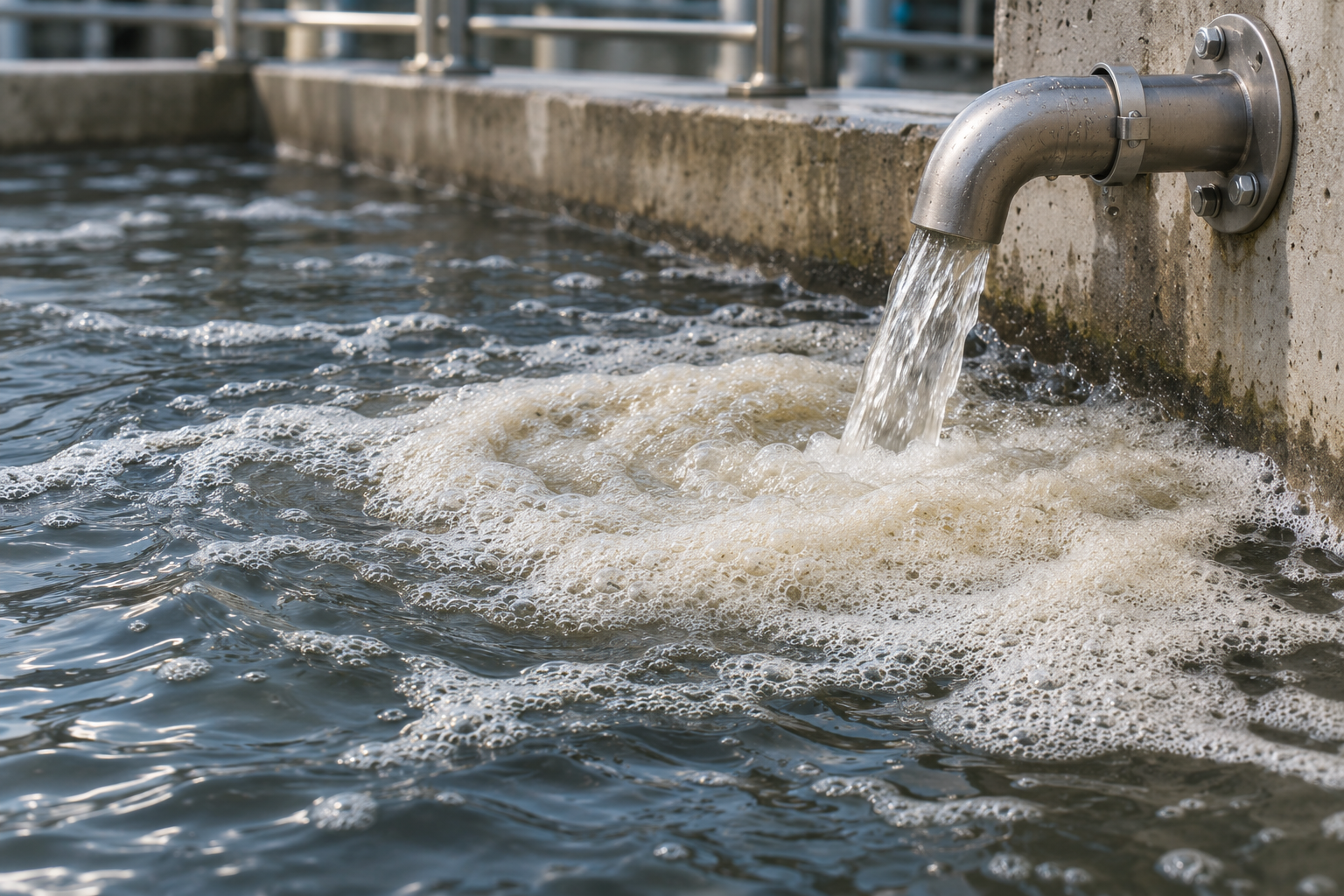
Match the silicone defoamer to the process
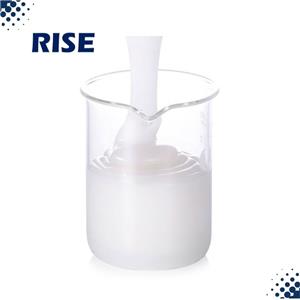
· Papermaking. White water and kraft black liquor call for different trial conditions. For its DEFOAMER1820 silicone defoamer emulsion, RISE CHEMICAL publishes a typical use range of 0.03–0.10% for black liquor, with adjustments based on actual foaming.
· Oil and gas. For a crude oil and gas separator, evaluate a silicone defoamer grade intended for hydrocarbon service under representative separation conditions.
· Power plant wet flue gas desulfurization. Assess foam control in the absorber slurry at operating temperature and solids content. Watch for recurring foam and slurry overflow.
· Steel mills. Test the product in the actual rolling emulsion or alkaline cleaning bath. Run the comparison under representative recirculation conditions, when foam is more likely to rebuild.
REQUEST A FREE SILICONE DEFOAMER SAMPLE
Founded in 2004, Shenyang Rise Surface Technologies Co., Ltd. (RISE CHEMICAL) develops and manufactures its products in-house. Tell us what is foaming, where it happens, and the operating pH and temperature if available. If you already use a silicone defoamer, share the current dose and what you want to improve. Contact us to discuss your application and request a free sample for testing.
Email: amy.lee@sy-rise.com · WhatsApp : +86 15714017827
English website: www.risechemical.com• Site em russo: www.risechemi.com